English
 Français
Présentation :
At a ferry terminal on the German coast, Omexom quietly solved one of renewable energy's trickiest puzzles, what to do when the sun produces more power than the grid can handle.
The AG Reederei Norden-Frisia, the ferry company connecting mainland Germany to the North Frisian Islands, faced a problem that many renewable energy operators know well: too much solar power in summer, and no easy way to use it wisely. Their site in Norddeich hosts a 1.7 MWp ground-mounted solar array and a 750 kWp carport installation, feeding what is now Lower Saxony’s largest EV charging park. The challenge? Without intelligent management, excess solar generation would either overload the local grid or simply go to waste, and neither outcome served customers, the grid operator, or the energy transition.
-
MWp
-
kW
-
OPM-Box


Smart Energy Orchestration for Real-Time Solar, Grid, and EV Balance
Omexom in Germany, stepped in as the engineering partner and deployed three of its proprietary OPM-Box (Modular Omexom Power Management) power management units across the site. An OPM-Box serves as the brain of the energy system: one master unit is situated at the medium-voltage connection point and acts as the central coordinator, while two additional units extend, over a fiber-optic link, to the solar arrays located 2.5 kilometers away. Together, they continuously balance what the panels produce, what the local grid can absorb, and what the parked electric vehicles need.
The system communicates directly with the local utility, Stadtwerke Norden, using a standard industrial protocol, and it already complies with Germany’s Redispatch 2.0 framework, the regulatory requirement for real-time grid balancing. Charging is dynamically adjusted based on the available solar surplus and the expected duration of a tourist’s car being parked. A visitor crossing for the weekend gets a different charging experience than someone leaving on the next ferry.
The OPM-Box doesn’t just connect solar panels to chargers. It reads the grid, reads the weather, and decides in real time where every kilowatt-hour does the best.
Maximizing Solar value with Storage
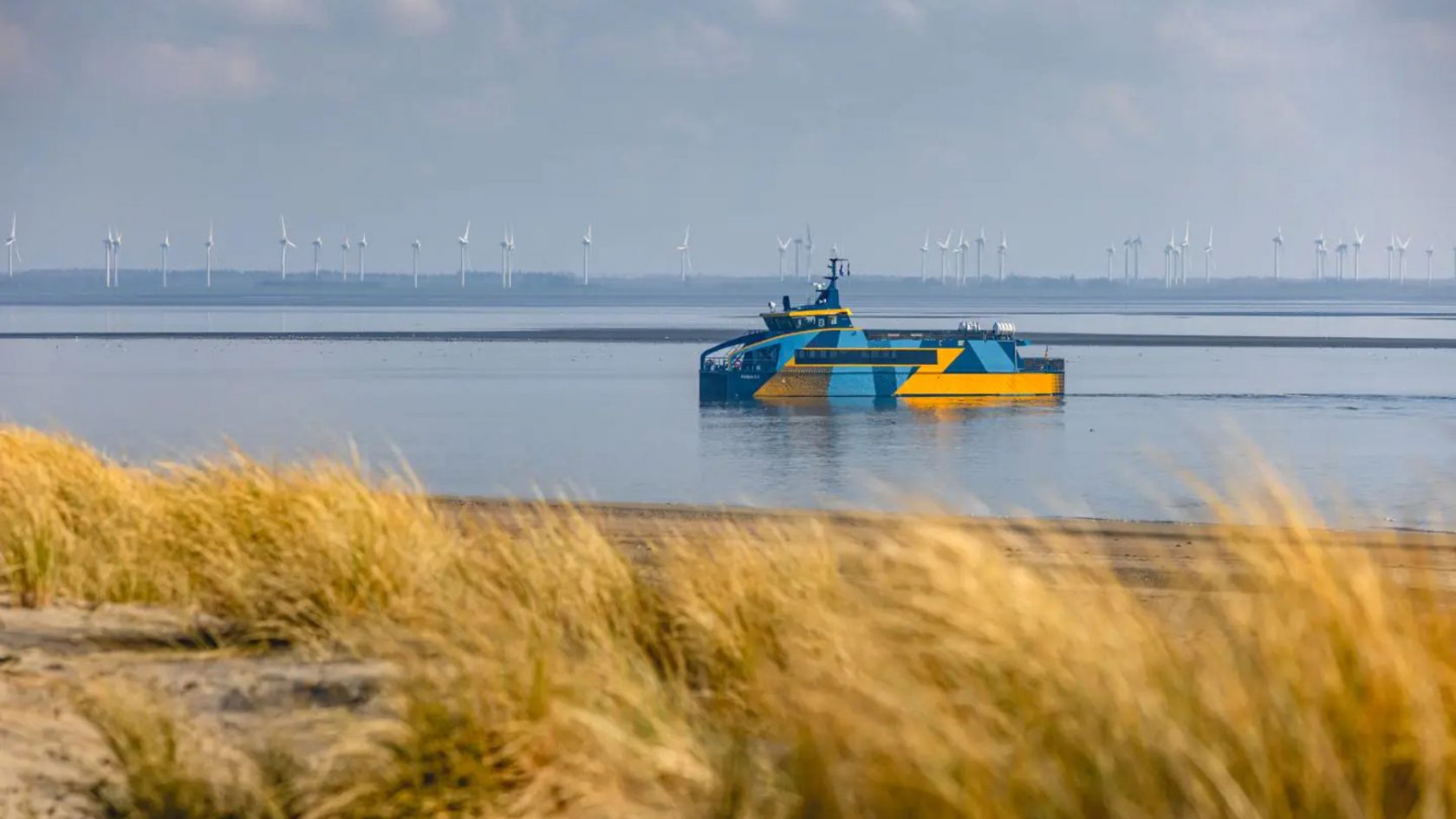
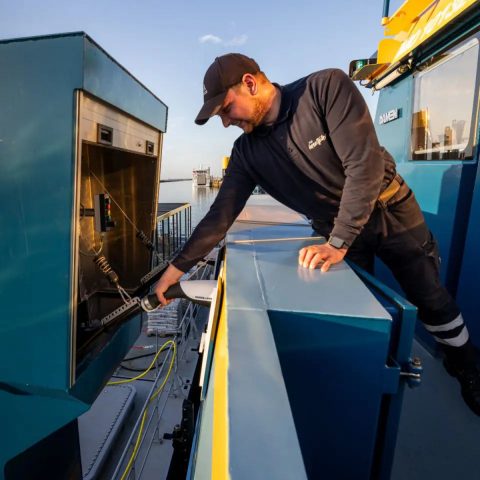
The implications extend beyond electric vehicles. The same solar energy system partially powers Germany’s first electric catamaran, which is operated by Norden-Frisia on island routes. A planned expansion will introduce two battery storage units with a combined capacity of up to 810 kW. This stored energy can be utilized during periods of high tourist demand or sold back to the grid after the summer season concludes and parking lot usage declines.
A Scalable, Vendor-Neutral Model for Smarter Energy Ecosystems
The significance of this project extends beyond Norddeich due to its innovative architecture. The OPM-Box is vendor-neutral and modular, enabling operators to integrate solar, battery storage, and electric vehicle charging in various configurations. The hardware is adaptable, which eliminates the need for costly replacements. Additionally, Omexom provides comprehensive support throughout the certification process under Germany’s NELEV regulation, thereby addressing a major administrative challenge for energy operators.
As coastal regions, tourist destinations, and ferry terminals across Europe look to decarbonize, the Frisia Ladepark offers a proven, replicable model: take an existing parking lot, layer in smart power management, and let locally generated renewables drive the transition, vehicle by vehicle, voyage by voyage.
-
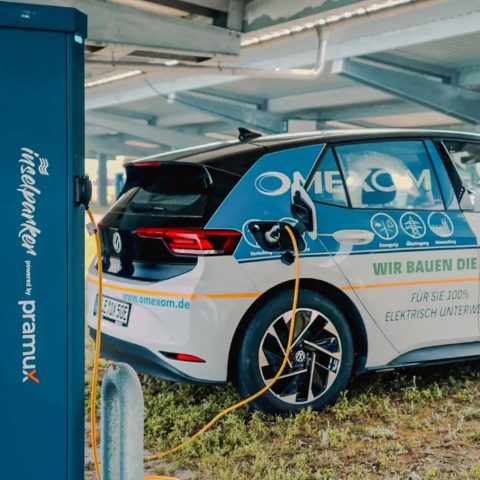
Frisia charging park. (Photo: AG Reederei Norden-Frisia)
-
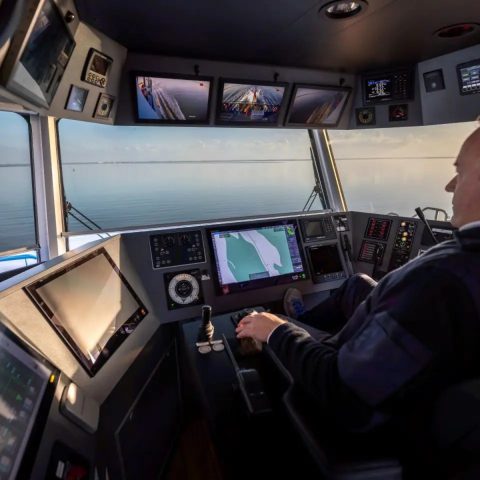
E-catamaran Captain Bridge (Photo: AG Reederei Norden-Frisia)
Latest news
-
Accéder à l'actualité New Distribution Substation in Sävar Strengthens Umeå’s Energy Grid
Publié le- Distribution / Energy Transition / Sweden
Umeå is growing more rapidly than most cities in northern Sweden. But much of the region’s existing infrastructure was built for consumption patterns that no…

-
Accéder à l'actualité Omexom at The Smarter E Europe 2026: Achieving Energy Transition Through Integrated Solutions
Publié le- Events / Germany
The acceleration of Europe’s energy transition presents substantial challenges on the path toward a decarbonized energy system. Grid operators, industrial stakeholders, and energy developers encounter…
-
Accéder à l'actualité Omexom Introduces OnShoreBox: A Tailored Approach to OPS Infrastructure in Ports
Publié le- Innovation / Power Generation / Spain / Urban Solutions
Ports welcome ferries, cruise ships, and container vessels, but they face ongoing pressure. Each terminal has its own space and operational limits, and the push…