English
 Français
 Deutsch
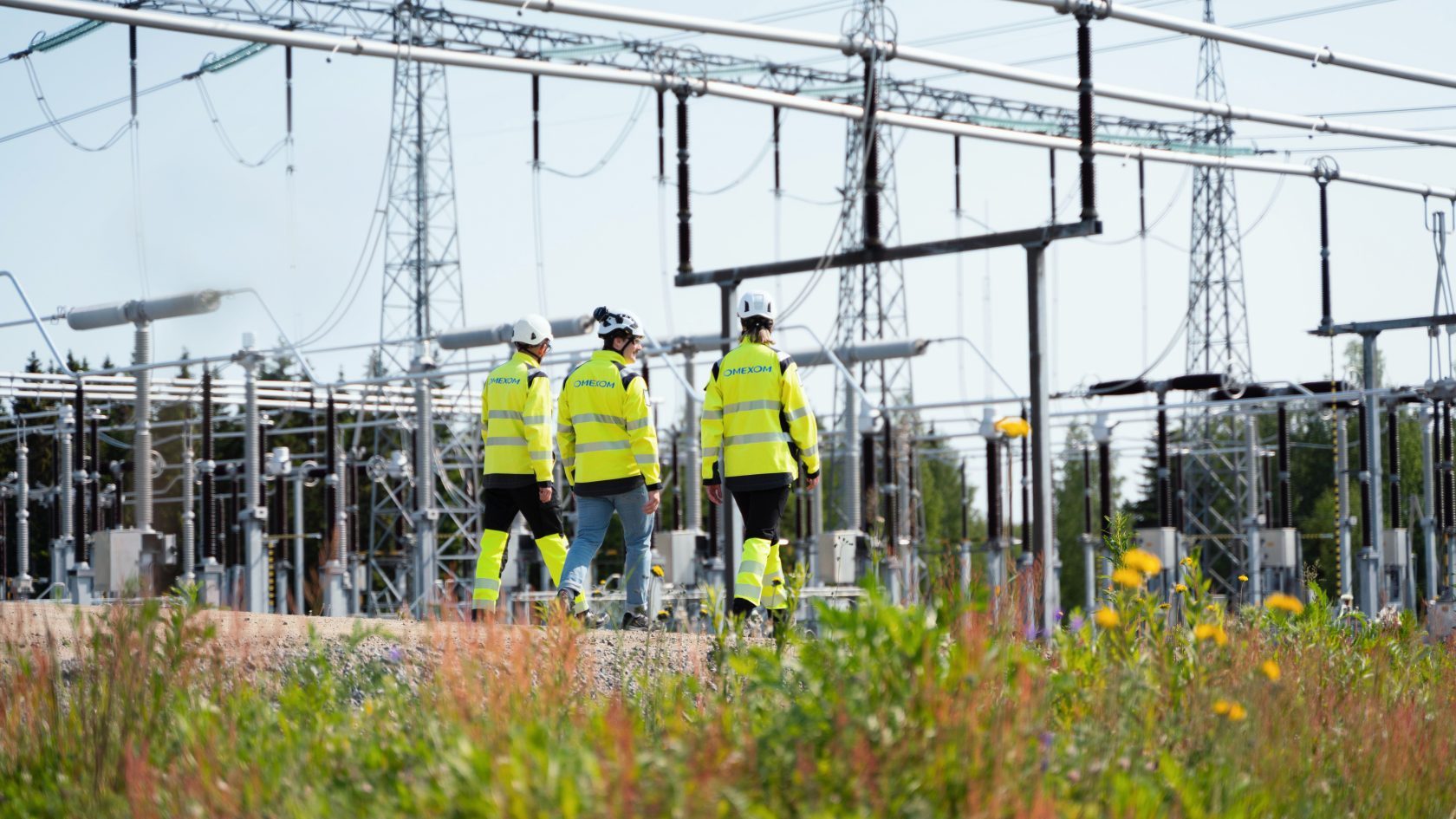
“At Eindhoven-Oost, several challenges come together. We are replacing installations that have reached the end of their service life, increasing capacity at the same time and creating room for additional connections. Throughout the works, the electricity supply also has to remain in service. It is this combination that makes the substation expansion so complex”
Présentation :
Deploying electric construction equipment is one thing. Making sure it can be charged at the right time is another.
As part of the expansion of the Eindhoven-Oost high-voltage substation, Omexom is working with its project partners and NRG Group, which supports energy planning and monitoring, to determine how the works can be carried out with lower emissions. The available grid connection capacity, charging schedules and actual energy consumption determine how much electric equipment can be deployed and when.
Expanding the Eindhoven-Oost high-voltage substation
The electricity grid in and around Eindhoven will be significantly expanded and reinforced in the coming years. The Brainport region is growing, new homes and businesses are being developed, and electrification and decarbonization are driving up electricity demand. According to calculations by TenneT and Enexis, electricity demand could be three to five times higher by 2050 than it is today. At the same time, the existing electricity infrastructure is reaching its capacity limits in several locations. Grid operators are therefore expanding and reinforcing the network at multiple sites.
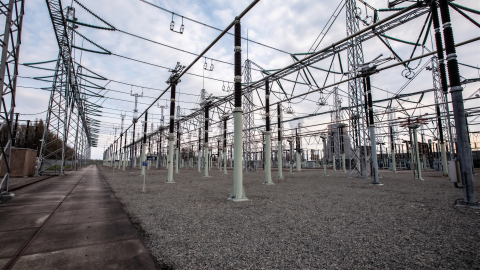
Eindhoven-Oost is one of these projects. Here, TenneT is expanding the existing 380/150 kV high-voltage substation. Two transformers dating from the 1960s have reached the end of their service life and need to be replaced. These transformers provide the connection between different voltage levels in the electricity grid. Before the existing units can be taken out of service, two new coupling transformers must therefore be installed.
The project involves more than replacing existing assets. The substation is also being expanded to increase transmission capacity and enable additional grid connections. The new configuration will include two 500 MVA coupling transformers. Both sections of the substation will also be extended with new bays, busbars, cable connections, and control and protection systems.
Omexom is TenneT’s main contractor for the expansion of both sections of the substation. This means that Omexom coordinates engineering and execution across the different disciplines, manages the schedule and technical interfaces, and is responsible for the verified handover of the works. Omexom also carries out primary and secondary electrical works itself and coordinates the project partners involved.
BAM Infra is responsible for the civil and structural works, Emmett Green Engineering works on the primary and secondary engineering, and Van Vulpen is involved, among other activities, in installing the high-voltage cables. VanderLinden, part of VINCI Energies Building Solutions, is responsible for engineering these systems for the new technical buildings and field control buildings.
Design information from the different parties is brought together in 3D models. This enables the project team to check whether components fit together both technically and physically and whether installations interfere with one another. Potential issues can therefore be resolved during the design phase, before they emerge on site during construction.
Low-emission construction involves more than deploying electric equipment
Within this extensive scope of work, the project team is also taking a close look at how the works are carried out. For each work package, the team assesses which types of construction equipment are available in electric versions and can be deployed in practice.
The project team deliberately refers to this as low-emission construction. Zero-emission alternatives are not currently available for every activity or transport movement. The approach is therefore to assess, activity by activity, where emissions can be avoided or reduced.
-
“If you say you are building entirely emission-free, you need to be able to substantiate that across the entire chain. That is not always possible yet. At Eindhoven-Oost, we are therefore looking very specifically at what can be electrified and what is needed to make that possible”

This approach raises another technical question. Electric construction equipment needs sufficient energy throughout the works, and it needs to be available at the right time. When several machines need to charge at the end of the working day, power demand can rise quickly. Energy supply therefore becomes an integral part of execution planning.
Making full use of what is already available
A grid connection is available at the project site. However, its capacity is not sufficient to supply all the planned electric construction equipment without additional measures.
Energy consumption at the connection is therefore monitored from the outset. This shows how much of the available capacity is actually being used and how much capacity remains available at different times. The energy plan and measurement data then indicate when additional measures are required, so the project team can anticipate them before the available grid connection becomes a constraint on execution.
“We want to use every available kWh from the existing grid connection before scaling up with additional battery capacity”, says Jordi Leijnse, CEO of NRG Group.
This approach prevents the site energy supply from being sized solely on assumptions made in advance.
Equipment planning becomes energy planning
To look ahead, Omexom asked the project partners to identify the equipment they expect to use during the different phases of the project. Equipment schedules from BAM Infra and Van Vulpen, among others, were supplemented with the expected consumption of Omexom facilities such as the site accommodation.
NRG Group combined this information with energy profiles developed through experience on previous projects. This has resulted in an energy plan that identifies the periods when expected power demand will exceed the capacity of the existing grid connection.
For Martijn Bolluijt, Project Manager at Omexom, electrifying construction equipment therefore means looking further ahead than equipment deployment alone.
“You need to determine in advance how much charging capacity you will need, when you will need it and whether there is enough space on site to charge the equipment. That has to be considered during the preparation phase,” he says.
A battery storage system used as a buffer can temporarily supply additional energy when the available grid connection cannot meet the full charging requirement. The battery is charged at times when capacity is available. Before the next charging peak, enough energy needs to be stored in the battery to meet demand at that time. In this way, energy available at one point in time can be used later. If there is a structural energy shortfall, additional measures will be required.
Charging infrastructure can also be managed using charging profiles. Not every machine needs to start charging at maximum power immediately after the working day ends. By spreading charging across the night, power peaks can be reduced. The condition is that every machine receives enough energy within the available charging window to operate the following day.
Managing energy based on actual consumption
Equipment schedules, and therefore energy demand, change throughout the project. Machines arrive and leave the site, and different activities follow one another.
Monitoring of the grid connection is therefore combined with current information from the project team. When new electric equipment is scheduled, its expected consumption can be compared with the energy use being measured at that time.
This makes it possible to assess in advance whether sufficient capacity is still available. If not, the team can adjust by using the battery buffer, changing charging times or combining both measures.
There are also options for tracking the consumption of individual machines or equipment types in more detail. The measurement method used depends on the equipment and the metering facilities available.
The resulting operational data can be used to refine energy profiles. It also provides a basis for a future comparison with conventionally powered equipment. To substantiate avoided diesel consumption and CO₂ emissions, a comparable reference case, data on the work performed and a documented calculation methodology are also required.
As the larger electric construction equipment has yet to be deployed, the project team is deliberately not making claims at this stage about results such as avoided diesel consumption or CO₂ emissions. The first step is to measure what actually happens in practice. Conclusions can follow afterwards.
From planning to execution
The approach can now be tested in practice. On October 15, 2026, the project leads from TenneT, Enexis, Omexom and BAM Infra jointly marked the official start of the works at Eindhoven-Oost. At the project site on Daalakkersweg, they marked the occasion by putting up the construction banner together.
For the low-emission construction approach, the next step is to see how the planning performs during execution. As more electric equipment is deployed, the project team will be able to assess whether the planned charging schedules and available energy supply match actual site operations. Measurement data will show where the plan works as intended and where adjustments are needed.
Real-world data for future projects
The approach at Eindhoven-Oost therefore generates information that goes beyond this individual project. Monitoring energy consumption during execution builds practical knowledge about the energy requirements of electric construction equipment and the load it places on the site’s energy supply.
NRG Group stores this data for Omexom and uses it to build specific energy profiles. In this way, Omexom is gradually developing a library of real-world energy data. For future projects, this can help determine earlier and more accurately how much power a construction site requires, whether the available grid connection is sufficient and when additional measures, such as battery storage, will be needed.
Latest news
-
Access the news Faster Expansion of a Critical High-Voltage Hub Enabled by Omexom’s Integrated, Collaborative Approach
Publié le- Substations / The Netherlands
As electricity demand rises across the Netherlands, early collaboration between engineers and field teams is helping bring critical grid capacity online faster.
-
Access the news Powering French Guiana’s Energy Transition: Connecting the Larivot Bioenergy Power Plant
Publié le- Energy Transition / Substations / Transmission
As electricity demand continues to grow in French Guiana, the territory faces a dual challenge: securing a reliable power supply while advancing its energy transition…
-
Access the news How 4D Planning Helped Omexom Deliver Rozenburg-Zuid on a Tight Schedule
Publié le- Gas Insulated Substations / Substations / The Netherlands
Rapid electrification, rising electricity demand, and the growth of renewable energy are putting increasing pressure on the Netherlands' grid capacity, driving major investments in transmission…