English
 Français
 Deutsch

What you think through properly upfront prevents issues later in the process. That applies to safety, efficiency, and certainly to sustainability.
Présentation :
As energy systems evolve to support electrification, renewable integration and growing demand, the infrastructure behind them must be designed to perform for decades. From substations and transmission networks to industrial power facilities, the decisions made during the design phase have a lasting impact on reliability, safety and environmental performance.
For companies operating critical energy infrastructure, sustainability is no longer an additional consideration. It is becoming a fundamental design principle, one that shapes the assets environmental footprint, resilience and long-term value well before construction even begins.
Why Sustainable Infrastructure Starts with Design
The environmental footprint of an energy asset is often associated with its construction or operation. However, many of the factors that determine long-term sustainability are established much earlier.
Material selection, equipment sizing, maintenance accessibility, transport requirements and end-of-life considerations are all influenced by engineering decisions made during the earliest project stages.
By addressing these factors from the outset, project teams can reduce resource consumption, improve asset performance and create infrastructure that remains reliable and efficient throughout its lifecycle, especially when energy assets are expected for 30-50 years.
Looking Beyond Construction Emissions
When discussing sustainable construction, attention often focuses on reducing emissions during project delivery. While this remains important, design teams have the opportunity to influence a much broader range of sustainability outcomes.
For example, selecting lighter materials can reduce transport requirements and installation impacts. Designing components for easier replacement can simplify future maintenance, while incorporating circularity principles can also improve the recovery and and reuse materials at the end of an asset’s life.
Together, these choices can lower environmental impact while helping maintaining the safety, reliability and operational performance required in critical energy infrastructure.
-
Sustainable design is not a project. It’s a new way of working.

Bringing Engineering, Construction and Maintenance Together
One of the biggest challenges in sustainable design is ensuring that engineering decisions remain practical once projects move into construction and operation.
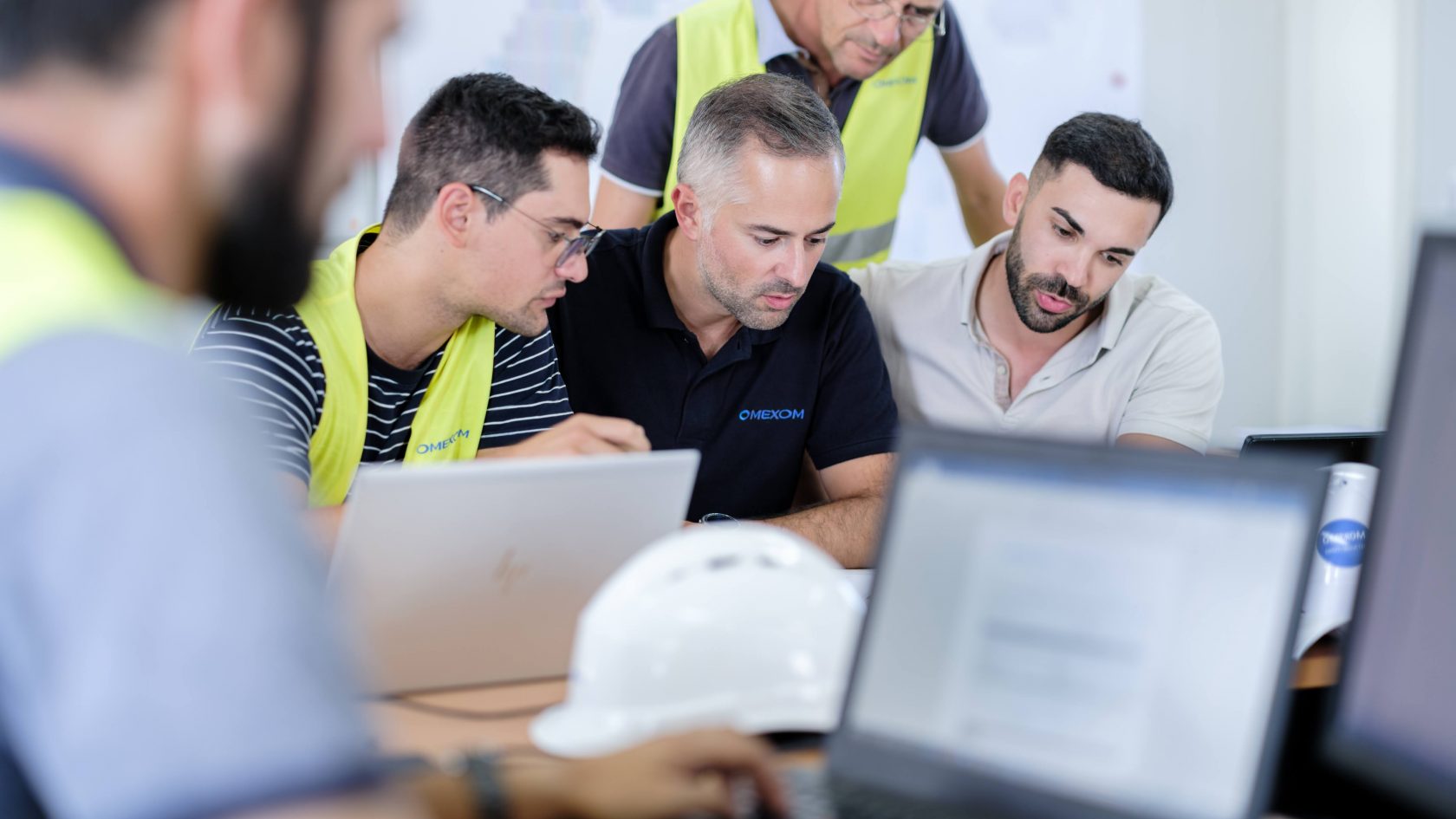
The most effective solutions are often developed when engineers collaborate closely with construction and maintenance teams from the beginning. Practical experience from the field can identify opportunities to simplify installation, reduce equipment needs and improve long-term operability.
At Omexom, this collaboration is strengthened by bringing together engineering, construction, and maintenance expertise across the full energy infrastructure value chain. This integrated approach helps deliver designs that are not only sustainable on paper, but also efficient, resilient and realistic to implement.
Designing for Circularity and Long-Term Value
The future of sustainable infrastructure depends on adopting a lifecycle perspective.
Rather than focusing solely on the initial project phase, engineers increasingly consider how assets will be maintained, upgraded, dismantled and potentially reused decades later.
Questions such as:
- Can components be easily replaced?
- Can materials be recovered at end of life?
- How can future interventions be performed safely and efficiently?
are becoming central to infrastructure design.
This shift helps organizations move beyond compliance and toward infrastructure projects that deliver long-term environmental, operational and economic value.
From Individual Initiatives to Standard Practice
Across the energy sector, sustainability is increasingly embedded into engineering processes rather than treated as a separate objective.
Dedicated sustainability specialists, environmental assessments and lifecycle impact studies are helping project teams better understand the consequences of design choices and identify opportunities for improvement.
The result is a gradual but significant transformation in how critical energy infrastructure is planned, designed, and delivered.Sustainable design is no longer viewed as a standalone initiative. It is becoming an integral part of everyday engineering practice.
Supporting the Energy Transition Through Better Design
The energy transition requires infrastructure that is reliable, adaptable and resilient enough to support future demands.
Achieving those goals starts with informed decisions at the design stage. By combining engineering expertise, operational experience and sustainability principles, organizations can develop infrastructure that delivers long-term value while reducing environmental impact.
At Omexom, sustainable design is about more than minimizing environmental footprint. It is about building energy infrastructure that is safer, more resilient and better prepared to meet the challenges of tomorrow.
Latest news
-
Accéder à l'actualité The Sovereignty Lever: Why Grid Infrastructure Is Becoming Europe’s New Security Question
Publié le- Energy Transition / Thought Leadership
As Europe's energy debate shifts from carbon targets to strategic independence, the humble substation is emerging as critical national infrastructure.

-
Accéder à l'actualité How 4D Planning Helped Omexom Deliver Rozenburg-Zuid on a Tight Schedule
Publié le- Gas Insulated Substations / Substations / The Netherlands
Rapid electrification, rising electricity demand, and the growth of renewable energy are putting increasing pressure on the Netherlands' grid capacity, driving major investments in transmission…
-
Accéder à l'actualité Faster Expansion of a Critical High-Voltage Hub Enabled by Omexom’s Integrated, Collaborative Approach
Publié le- Substations / The Netherlands
As electricity demand rises across the Netherlands, early collaboration between engineers and field teams is helping bring critical grid capacity online faster.